





Author: Ben Barron-Millar, Senior Consultant, Value Communication
The National Institute for Health and Care Excellence (NICE) has published its Annual Report and Accounts for 2025 to 2026, and it reads as a year of genuine momentum. Against a backdrop of major policy reform, a new chief executive and a rapidly broadening remit, the headline story is one of a faster, more relevant and far wider-reaching organisation. For medicines and healthtech developers, however, the details matter just as much as the message. Below, we have distilled what worked, where NICE fell short, and what companies should do about it.
The Headline Results
On its core mission, NICE moved in the right direction on almost every measure of timeliness and relevance:
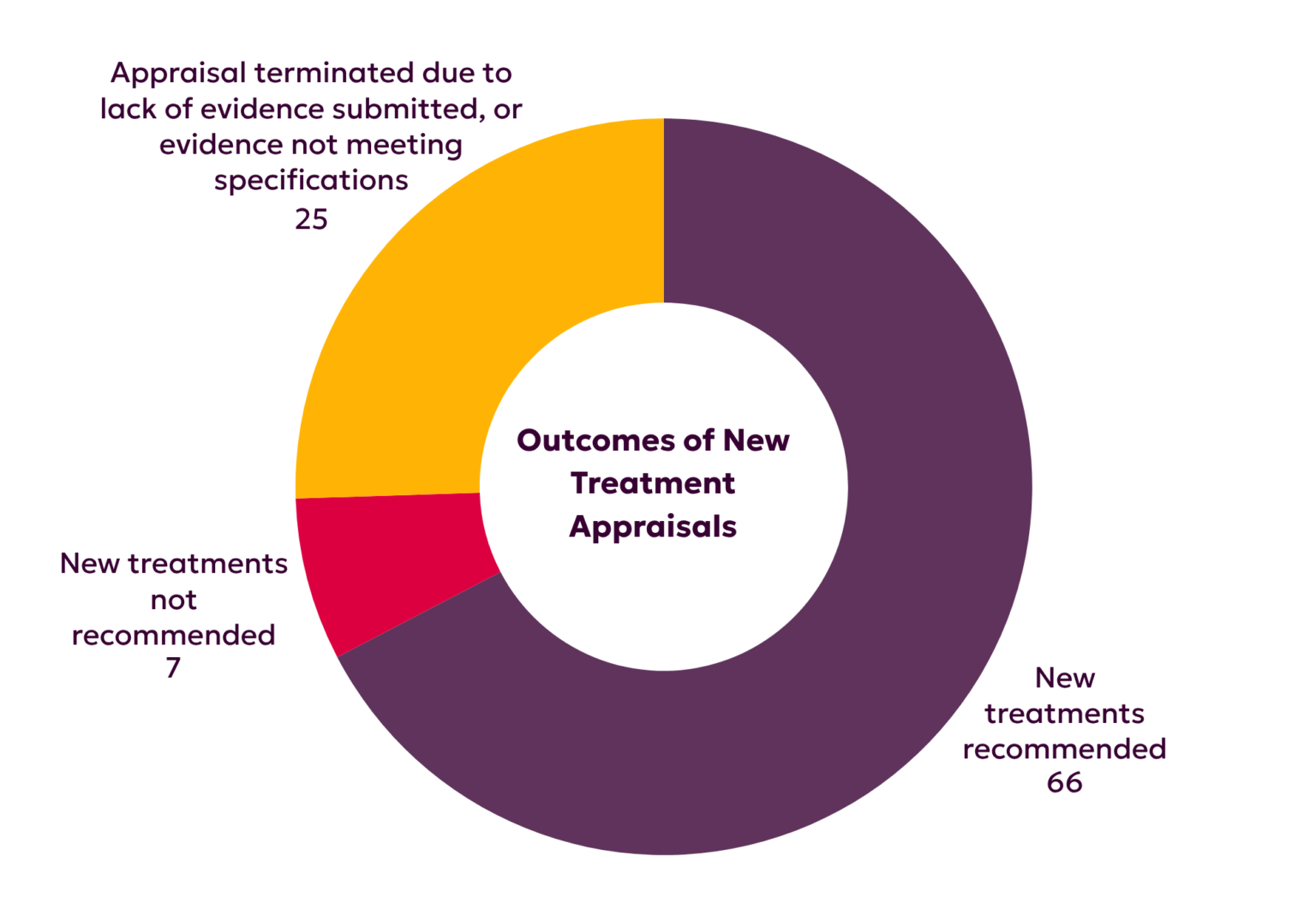
- 178 pieces of new and updated guidance and standards were published, and NICE continues to recommend around 91% of the medicines it evaluates (roughly 70 a year), with 66 new treatments recommended in-year.
- Guidance production is now 30% faster for medicines and 9% faster for healthtech than in April 2024, keeping NICE on course to make England the third-fastest country in Europe for access to medicines by 2030.
- 100% of final guidance was published within 240 working days of the Invitation to Participate (against a 60% target and just 44% the year before), and the median time from marketing authorisation to recommendation fell to 232 days, from 332.
- Users remain confident: 82% say NICE guidance is usable and 83% say it is relevant, both up on the previous year, while roughly three-quarters of scorecard medicines saw increased uptake.
Crucially, the year also marked a landmark expansion of NICE’s role. Under the 10 Year Health Plan, NICE launched the National Healthtech Access Programme (February 2026) – complete with a funding mandate – starting with capsule sponge tests and artificial intelligence (AI) tools for prostate and breast cancer. A new MHRA–NICE aligned pathway (April 2026) promises to bring medicines to patients three to six months sooner through parallel licensing and value decisions, and the cost-effectiveness threshold is rising to £25,000–£35,000 (still lower in comparison to other countries’ benchmarks) alongside a new EQ-5D-5L value set.
Where NICE Fell Short
The same report is refreshingly candid about the gaps – and most of them sit in healthtech and delivery consistency:
- Healthtech timeliness lagged its targets: only 30% of evaluations moved from referral to prioritisation board within 66 working days (target 50%), and just 18% completed guidance within nine months (target 35%).
- Healthtech output fell to 34 pieces (from 40), and the mean time from marketing authorisation to recommendation actually slipped to 367 days, against a 335-day target.
- There were seven healthtech confidentiality breaches (against a tolerance of six) and three products published with errors (target: zero).
- Softer organisational signals also missed: staff empowerment sat at 67% (target 75%) and favourability at 75% (target 80%).
Areas to Improve – and Watch
Taken together, the results point to four priorities that will shape the operating environment for industry in 2026 and beyond:
- Fix the healthtech pipeline. The funding mandate only delivers if prioritisation-to-development hand-offs and the nine-month build accelerate; expect continued process redesign.
- Operationalise the aligned pathway. With MHRA and NICE decisions running in parallel, companies need earlier, integrated evidence generation and should make full use of the new Integrated Scientific Advice service.
- Prepare for new health economics. The higher threshold and EQ-5D-5L value set will reshape cost-effectiveness cases; models should be stress-tested against both now, not at submission.
- Raise evidence quality. With 25 technology appraisal terminations (due to lack of evidence submitted, or evidence not meeting specifications) in a single year, robust, submission-ready dossiers remain the single biggest lever companies control over a positive outcome.
The Bottom Line
NICE’s 2025–26 report describes an organisation that is more relevant, more timely and dramatically broader in scope – next delivery, particularly in healthtech, has to catch up. For developers, the message is clear: the UK is becoming a faster, more attractive launch market, but capturing that value will reward early engagement, integrated MHRA–NICE planning and threshold-ready evidence. That is precisely the terrain where getting the strategy right early makes the difference between access and delay.
To reduce the risk of fewer UK launches, including pressures from international policies such as Most Favoured Nation pricing, NICE is proactively engaging with industry on launch decisions, patient access, and its long-term sustainability. This engagement forms part of NICE’s expanding international role in shaping HTA methods, managed access and real-world evidence. NICE’s response to pressures are based on staying relevant and remaining a key player in more predictable global market access.
Planning a UK submission or navigating the new pathway? Connect with our team now
- Source: NICE Annual Report and Accounts 2025 to 2026 (HC 454), published 7 July 2026, available at www.nice.org.uk.