






Univ.-Prof. Dr. Matthias P. Schönermark
Chief Strategy Officer
Three big conversations in Vienna. Three lessons for pharma.
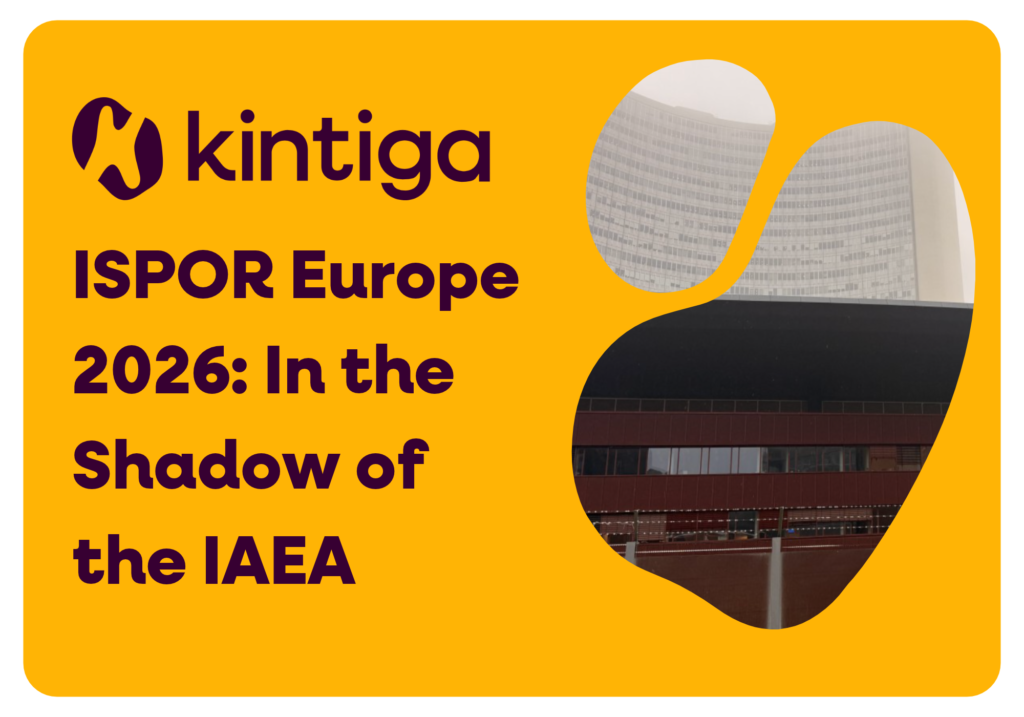
On a foggy November morning in Vienna, the headquarters of the International Atomic Energy Agency loomed behind the Austria Center, where ISPOR Europe 2026 was taking place. Somehow, the setting seemed rather appropriate for a conference dominated by uncertainty.
With more than 6,000 participants, thousands of posters and an impressive industry exhibition, ISPOR remains an extraordinary gathering of our profession. Yet walking through the exhibition, I occasionally found myself reminded of Rilke’s panther, his gaze wearied by the endless succession of bars. In my case, they were exhibition stands, with remarkably similar promises.
Three themes dominated: EU-HTA, Most Favoured Nation pricing, and Artificial Intelligence.
All three matter enormously. But what did we actually learn, and more importantly, what should the industry do?
1. EU-HTA: From regulatory compliance to organisational readiness
Five published Joint Clinical Assessments, covering very different technologies, populations and clinical circumstances. Hardly a sufficient empirical basis for sweeping conclusions about the success or failure of Europe’s new HTA framework.
The machinery is running. Whether it will ultimately deliver on its promise of greater efficiency and less duplication remains to be seen. And while much of the discussion focused on procedures, PICOs and dossier requirements, I believe the more fundamental challenge is organisational.
A JCA is an assessment, not an appraisal. Common scientific evidence does not automatically produce common national decisions. Companies need to understand how European requirements interact with national HTA and reimbursement processes, and prepare accordingly.
This becomes particularly relevant for small and mid-sized biopharma companies developing orphan medicines. From January 2028, orphan products not already covered by existing JCA obligations will also enter the framework. For some companies, a critical decision is already approaching: Can they realistically submit their EMA marketing authorisation application before the new rules apply, or must they prepare for the European route?
My advice: Treat EU-HTA readiness as an organisational capability, not a regulatory work package. Establish cross-functional governance, involving Clinical Development, Regulatory Affairs, Biostatistics, HEOR, Market Access and key national teams. Introduce structured readiness reviews, PICO simulations and strategic decision gates. Connect European evidence planning with national access requirements from the outset.
Evidence architecture matters. But so does the organisation capable of designing and delivering it.
2. MFN: When uncertainty rises, take your own pulse
Samuel Shem’s The House of God offers a memorable rule for physicians: “At a cardiac arrest, the first procedure is to take your own pulse.”
Not bad advice for strategy consultants, either.
MFN and the evolving US pricing environment are serious issues with potentially profound consequences for global pricing, launch sequencing and European access. But I find it rather unsettling when advisors appear more agitated than their clients. Consultants should be the last people in the room to panic, not the first.
Political uncertainty is not a reason for paralysis, nor is alarmism a substitute for strategic thinking. When the future cannot be predicted with confidence, the value of good advice lies in expanding the client’s ability to make decisions, not in amplifying the uncertainty.
My advice: Explore plausible scenarios. Quantify their implications. Use strategic simulations and wargaming to test options. Establish decision triggers and create governance formats that bring pricing, market access, commercial, regulatory and corporate leadership into the same conversation.
The objective is not to predict an unpredictable political future. It is to make organisations capable of responding intelligently and decisively when circumstances change.
3. AI: Stop selling speed. Start demonstrating value
Artificial Intelligence was everywhere. Apparently, almost everybody now offers AI-powered literature reviews, evidence synthesis or JCA dossier development.
Some developments are genuinely impressive. AI-assisted literature searching and evidence extraction are rapidly becoming standard capabilities, if not commodities. But when somebody promises a complete JCA dossier in two weeks, I have a few questions.
What exactly has been validated? How reproducible are the results? How much expert review and correction is still required? And what is the actual efficiency gain once quality assurance has been factored in?
A compelling demonstration is not the same as a validated production process.
I suspect we will see a considerable shakeout in this market. Building robust, validated and economically meaningful AI solutions requires substantial investment, deep domain expertise and rigorous quality assurance. Not every provider will have the resources, capabilities or discipline to make that transition.
And there is another dimension: validated workflows, proprietary methods and the expertise embedded in them represent valuable intellectual property. Companies should be asking not only what an AI solution can do, but also how reliably it performs, how its performance has been demonstrated, and who controls the underlying know-how.
My advice: Look beyond impressive demonstrations and ambitious productivity claims. Ask for evidence of validation, reproducibility, error rates and actual end-to-end efficiency gains, including the cost of human oversight. Examine how these systems integrate into existing workflows, how quality is governed and how intellectual property is protected.
The competitive advantage will not come from simply having AI. It will come from knowing how to make it work, reliably and at scale.
Beyond the noise
As last year in Glasgow, I found the quality of scientific contributions remarkably uneven. Some presentations were outstanding. Others were surprisingly generic, occasionally with conclusions that seemed only loosely connected to the evidence presented.
Yet the most valuable part of ISPOR was something entirely different:
Meeting old friends and new colleagues. Having candid conversations beyond polished corporate messages. Discovering that beneath the confident presentations, many people across pharma and consulting share genuine concerns about the future, but also a remarkable determination to shape it.
Those conversations left me optimistic. We work in an extraordinary industry, one that continues to produce innovations capable of transforming people’s lives. In uncertain times, our responsibility as scientists, industry leaders and advisors is to bring clarity, judgement and courage to the decisions that matter.
And looking across towards the IAEA, that seemed a fitting final thought: when the stakes are high, discipline matters more than drama.