






Wim Neckebroeck
Director, Regulatory Affairs
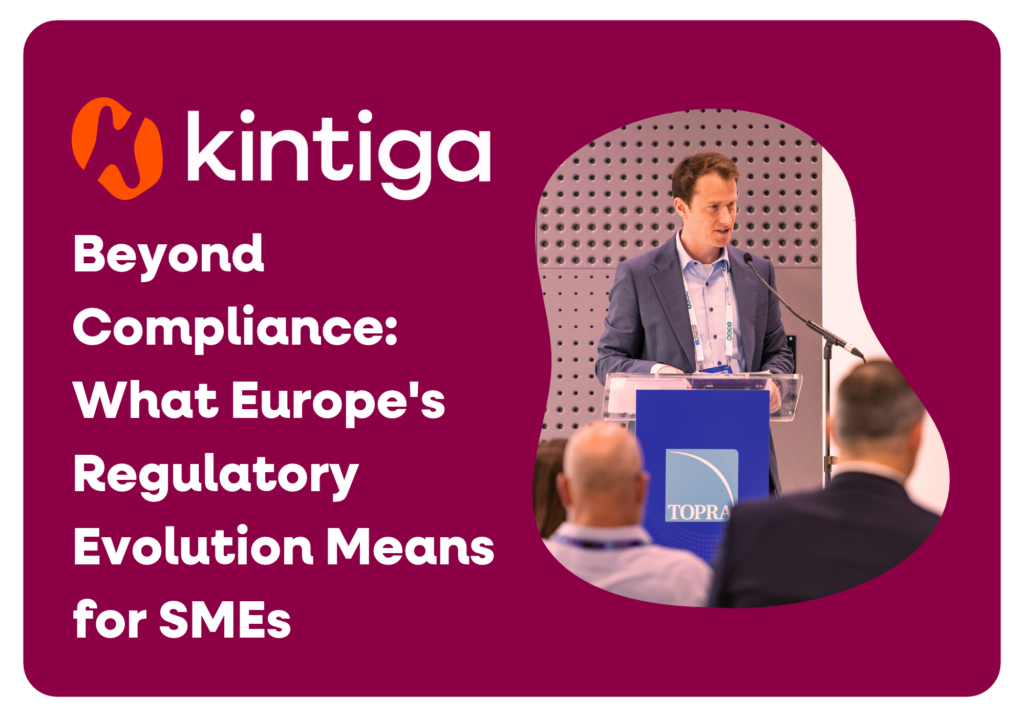
Reflections from moderating the TOPRA Symposium 2026 session “How Can SMEs Navigate the Regulatory Legislative Wave: Small but Compliant?”
Innovation has always been the lifeblood of the life sciences industry. Today, however, the pace of change feels fundamentally different. Emerging technologies are transforming how medicines are discovered, developed and evaluated. Gene therapies, cell therapies, precision medicine, artificial intelligence, advanced analytics and novel evidence-generation approaches are creating opportunities that were barely imaginable a decade ago.
At the same time, the regulatory environment is evolving in response. At the TOPRA Symposium 2026, held in Utrecht from 19-21 October, regulators, industry leaders and regulatory professionals came together to discuss the challenges and opportunities shaping the future of healthcare innovation. The symposium included dedicated tracks covering human medicines, veterinary medicines, medical devices and for the first time an SME track, reflecting the breadth of change occurring across the healthcare ecosystem.
The SME-focused panel I had the privilege of moderating explored a question that many emerging biopharmaceutical companies are asking today: How do innovative SMEs remain agile and ambitious while navigating an increasingly complex regulatory landscape? While the discussion covered multiple topics, one message stood out clearly. The organisations that succeed in the coming years will view regulatory strategy as an enabler of innovation rather than a compliance requirement.
The Core Challenge Facing Today’s SMEs
Large organisations can often absorb inefficiencies. For SMEs, every decision carries greater weight. Development timelines are tight. Resources are limited. Investors and stakeholders expect progress. Teams must generate meaningful evidence whilst managing scientific, regulatory and commercial uncertainty. In this environment, regulatory decisions are not administrative milestones to be addressed later in development. They can fundamentally influence a product’s future trajectory. Discussions throughout the session highlighted how early decisions can impact:
- Development strategy
- Evidence generation plans
- Future regulatory interactions
- Resource allocation
- Development risk
- Patient access timelines
For innovative companies, regulatory planning increasingly needs to happen alongside scientific planning rather than after it. The companies making the greatest progress are often those that understand this connection earliest.
Why Early Engagement Matters More Than Ever
A recurring theme throughout the session was the value of engaging with regulators early. Many SMEs naturally prioritise scientific milestones. Demonstrating proof of concept, generating clinical data and securing funding are immediate priorities. Regulatory planning can sometimes be viewed as something that becomes relevant later. However, by the time many organisations start thinking seriously about regulatory pathways, significant development decisions have already been made.
- Endpoints may be established,
- Evidence plans may be fixed,
- Development programmes may already be committed to a specific direction.
At that stage, change becomes both difficult and expensive. This is why regulatory engagement should not be viewed as a checkpoint. It should be viewed as a strategic tool. Early dialogue can help organisations understand expectations, identify risks, challenge assumptions and explore options before major investments have been made. For SMEs operating in resource-constrained environments, that reduction in uncertainty can create substantial value.
Innovation Is Moving Faster Than Traditional Frameworks
One of the most interesting discussions during the session focused on the increasingly diverse range of technologies entering development. Many innovative therapies today sit at the edge of existing regulatory experience.
Advanced Therapy Medicinal Products (ATMPs), gene-editing technologies, precision medicine approaches and novel biomarker-driven programmes all present opportunities that extend beyond traditional development models.
The challenge is that innovation often moves faster than established precedent. For SMEs, this can sometimes create concern. Clear guidance and established pathways provide reassurance. Novel technologies inevitably introduce uncertainty.
Yet the discussion highlighted an important shift in perspective. Uncertainty should not always be viewed as a barrier – in many cases, it creates an opportunity for dialogue.
Increasingly, regulators are engaging with novel technologies at earlier stages to understand emerging scientific developments and support innovation where appropriate. For SMEs developing genuinely differentiated products, this engagement can become an important strategic advantage. The most successful organisations are often those willing to start conversations before they need definitive answers.
A Wealth of Support Remains Underutilised
One of the strongest messages from both the panel discussion and broader regulatory perspectives presented during the symposium was that many SMEs are not making full use of the support available to them. Across Europe, innovators have access to a range of mechanisms specifically designed to reduce uncertainty and facilitate development. Examples discussed included:
- Scientific Advice
- Protocol Assistance
- PRIME
- Innovation Task Force interactions
- Qualification procedures
- Dedicated SME support initiatives
These programmes exist because regulators recognise that innovative products often require constructive dialogue throughout development. However, many companies continue to engage too late or do not fully appreciate the strategic value these opportunities can provide. There is a lack of awareness around the benefits of engaging proactively to de-risk development programmes before significant investment decisions are made.
The purpose of these interactions extends beyond obtaining regulatory answers: they help organisations make better decisions. The earlier critical questions are addressed, the more flexibility organisations retain in their development programmes.
Regulatory Change Creates Opportunity as Well as Obligation
The European regulatory environment is changing. For many companies, regulatory change is immediately associated with additional requirements, new processes and increased complexity. Those concerns are understandable; however, the discussion highlighted a broader perspective.
Many ongoing reforms are also intended to make regulatory systems more responsive to scientific innovation. New approaches under discussion across the regulatory landscape seek to improve flexibility, strengthen engagement with innovators and support the evaluation of emerging technologies that do not fit neatly within traditional frameworks.
For SMEs, this creates an important challenge: regulatory intelligence cannot focus exclusively on compliance. It must also focus on opportunity. While understanding what is changing is important, understanding what those changes may enable is often even more valuable. The organisations that consistently outperform their peers are often those that identify strategic implications before they become obvious.
Building for Long-Term Success
Perhaps the most important lesson from the session was that regulatory excellence is becoming increasingly strategic. Historically, regulatory affairs is often viewed as a function focused primarily on compliance and submissions but that role is rapidly expanding. Today, regulatory strategy influences how evidence is generated, how development programmes are structured and how organisations prioritise investment. The most successful SMEs are no longer asking:
“What will regulators require?”
They are asking:
“How can regulatory insight help us make better decisions today?”
That is a fundamentally different mindset. It shifts regulatory engagement from a reactive activity to a proactive capability and ultimately, that shift can create a significant competitive advantage.
Four Takeaways for SMEs
Looking back on the discussion, four practical lessons stand out.
- Start earlier than feels necessary. Early engagement creates more options and reduces future risk.
- Investigate the support available. Scientific Advice, PRIME and SME-focused initiatives exist to help innovators navigate uncertainty.
- View regulators as strategic stakeholders. Meaningful dialogue can strengthen development decisions long before submission.
- Focus on adaptability. Scientific innovation, technology and regulatory expectations will continue to evolve. Successful strategies must evolve with them.
The life sciences industry is entering a new era. Scientific innovation continues to advance at remarkable speed. Regulatory systems are adapting. New technologies are transforming development. Expectations across the healthcare ecosystem continue to grow. For SMEs, success will depend on more than scientific excellence alone. It will require the ability to navigate uncertainty, engage proactively, and make informed strategic decisions throughout development.
Looking Ahead: What’s Next for SMEs
What became clear during the discussion at TOPRA is that innovation and regulation should not be seen as opposing forces. When approached strategically, they become mutually reinforcing. The companies best positioned for the future will not simply be those with the most innovative science. They will be the organisations that combine innovation with regulatory foresight, constructive engagement and a clear understanding of how to turn scientific potential into patient impact. Because increasingly, regulatory strategy is not simply about reaching approval: it is about creating the conditions for success.
At Kintiga, we help life science companies develop regulatory strategies that support confident decision-making from the earliest stages of development. Whether you are evaluating a novel technology, preparing for regulatory interactions, assessing the implications of evolving European legislation or building a broader evidence strategy, our team combines deep regulatory expertise with a practical understanding of the wider market access landscape.
If you would like to discuss how your organisation can turn regulatory uncertainty into strategic opportunity, we’d be delighted to continue the conversation.